What Is Nickel-Titanium Used For?
Nickel-titanium, also called Nitinol, is a high-performance alloy made from nickel and titanium. This material offers two important properties: shape memory effect and superelasticity. Because of these features, manufacturers use nickel-titanium in many medical and industrial products.
Today, the nitinol product plays an important role in minimally invasive medical devices, aerospace systems, robotics, and precision engineering.
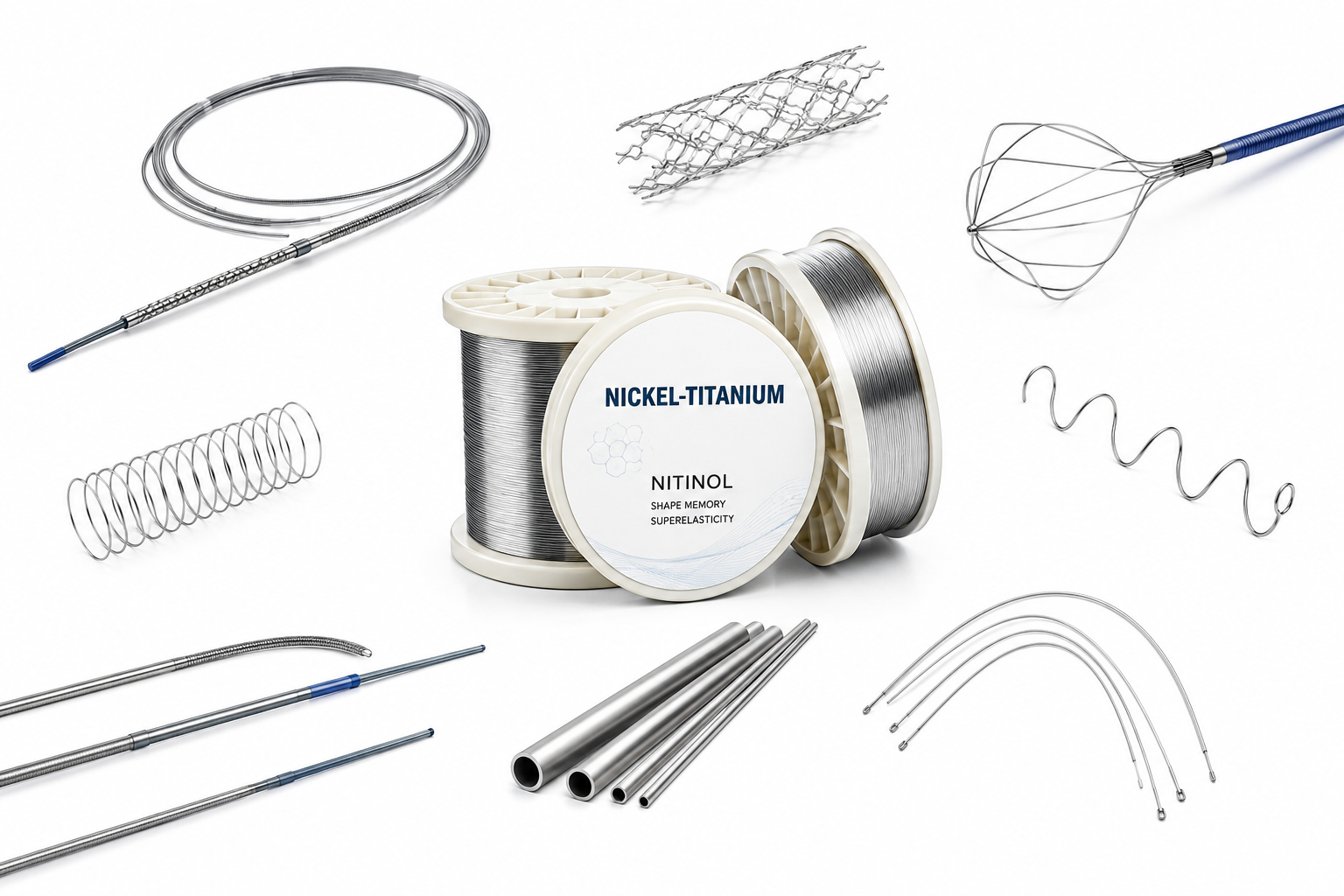
Nitinol in Medical Devices
Medical manufacturers use this material more than almost any other industry. The material provides flexibility, corrosion resistance, and biocompatibility. As a result, doctors can use smaller and safer devices during surgery.
Common medical applications include:
- Guidewires
- Catheter reinforcement
- Orthodontic archwires
- Stone retrieval baskets
- Surgical instruments
- Endoscopic tools
- Vascular stents
Superelastic nitinol wire can bend inside the human body and then return to its original shape. Therefore, it improves navigation and reduces tissue damage during procedures.
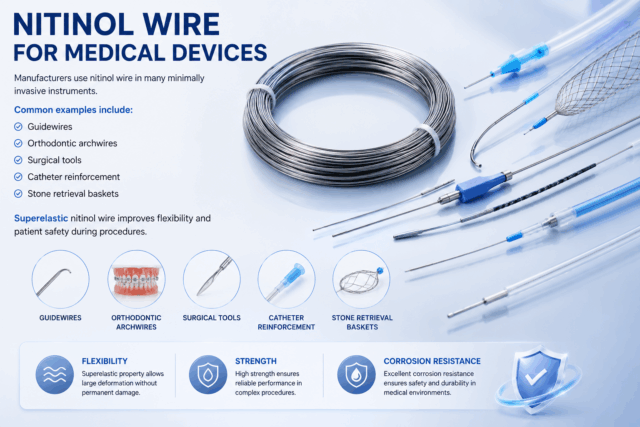
Common Medical Ni-Ti Products
| Product | Main Function |
|---|---|
| Nitinol wire | Flexible medical components |
| Nitinol tube | Catheter and endoscope support |
| Nitinol spring | Shape recovery and force control |
| Nitinol rope | Torque transmission |
| Nitinol stent | Blood vessel support |
Nitinol in Industrial Applications
Many industrial companies also use nickel-titanium because the alloy performs well under stress and repeated movement.
For example, engineers use this material in:
- Robotics
- Aerospace components
- Precision actuators
- Smart sensors
- Eyeglass frames
- Mobile electronics
- Automotive systems